
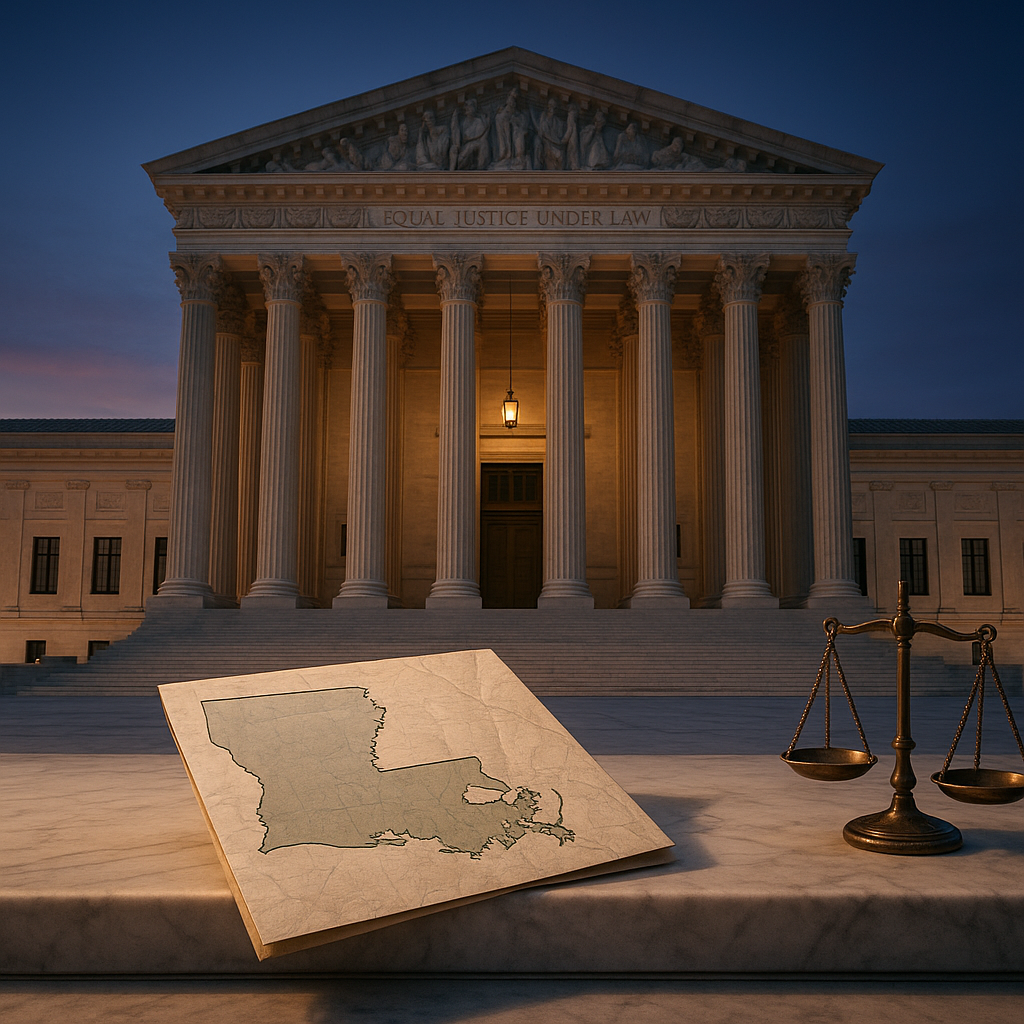
The Supreme Court issued a decision that narrows the scope of a central provision in the Voting Rights Act, a law originally enacted to protect minority voters from discrimination. The ruling stems from a case involving Louisiana’s congressional map, where the Court found that the current application of the provision went beyond what Congress intended. Legal analysts note that the decision does not eliminate the provision entirely but reshapes how it can be used in future redistricting challenges.
In the immediate aftermath, Louisiana Republicans have begun discussing the possibility of canceling upcoming U.S. House primary elections, arguing that the new legal landscape creates uncertainty about candidate eligibility and district boundaries. State officials say they are reviewing the ruling to determine the best course of action while ensuring compliance with federal law. Democrats and voting rights advocates warn that such moves could lead to voter confusion and reduced participation.
The broader political impact of the decision is already being felt across the nation. Scholars suggest that the adjustment may encourage other states to pursue redistricting plans that were previously considered risky under the stronger interpretation of the Act. Consequently, the balance of power in upcoming elections could shift, particularly in regions with significant minority populations where the Voting Rights Act has historically played a protective role.
Critics of the ruling contend that it opens the door to potential disenfranchisement, as the curtailed provision may limit the ability of voters to challenge discriminatory maps effectively. They argue that without robust federal oversight, state legislatures might enact boundaries that dilute minority voting strength. Supporters of the decision, however, maintain that it restores a proper balance between federal authority and state sovereignty in electoral matters.
As the legal and political processes unfold, election administrators, candidates, and voters alike are monitoring developments closely. The coming months will likely see further litigation, legislative responses, and public debate over how best to uphold fair representation while respecting the Court’s latest interpretation of the Voting Rights Act.




COMMENTS