

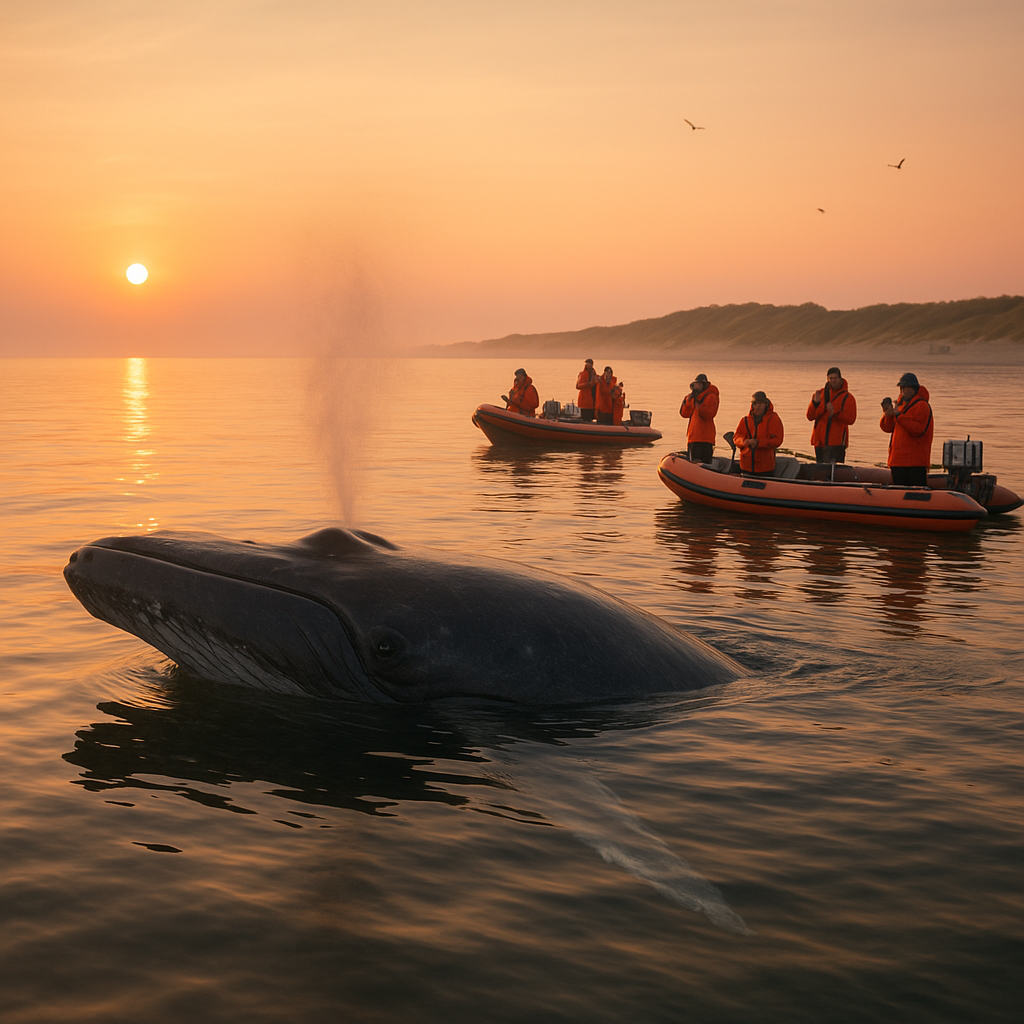
A humpback whale nicknamed Timmy has been the focus of a coordinated response off the German coastline after remaining stranded for several weeks. Local authorities, marine biologists, and volunteer groups have mobilized resources to assess the animal’s condition and explore options for returning it to deeper waters. Initial observations indicated that the whale was in a weakened state, prompting discussions about the safest course of action.
Experts from several research institutions cautioned that direct intervention could pose risks to both the whale and the responders, noting that the animal’s size and condition require careful handling. Despite these advisories, a plan was developed to move the whale using a specially adapted barge, a method that has been employed in similar situations elsewhere. The barge was positioned near the shore, and teams began the delicate process of securing the animal for transport.
Over the course of several days, the barge carrying Timmy traveled slowly toward the North Sea, navigating through tidal currents and monitoring the whale’s vital signs. Support vessels accompanied the convoy, providing additional oversight and readiness to assist if needed. Throughout the journey, observers reported that the whale appeared stable, and no adverse incidents were recorded.
Upon reaching designated waters farther from the coast, the team released the barge’s restraints, allowing Timmy to swim freely. Post‑release monitoring showed the whale moving steadily and displaying normal behaviors associated with its species. Officials have stated that continued observation will take place over the coming days to ensure the animal’s successful reintegration into its natural habitat.
The operation has highlighted the importance of international cooperation and rapid response networks when dealing with large marine mammals in distress. While the outcome remains cautiously optimistic, the incident serves as a reminder of the challenges inherent in balancing animal welfare with safety considerations for both wildlife and human responders.




COMMENTS