
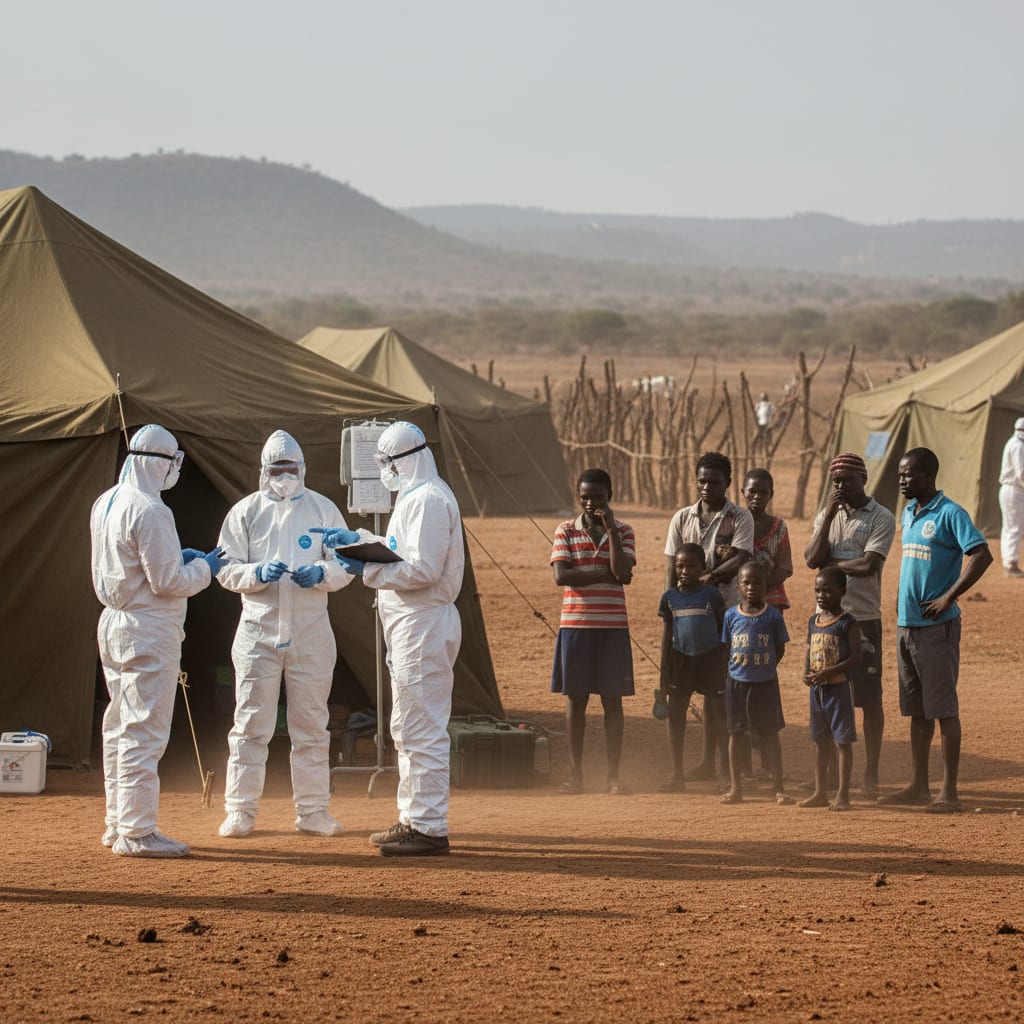
At least 118 deaths have been reported in an Ebola outbreak in the Democratic Republic of Congo (DR Congo), with more than 390 suspected cases, according to local officials. A spokesman for the DR Congo government confirmed the updated death toll and noted that cases are now being reported over a wider geographical area.
The US Centers for Disease Control and Prevention (CDC) has also confirmed two cases and one death in Uganda. The World Health Organization (WHO) has declared the current strain of Ebola, caused by the Bundibugyo virus, an international emergency.
Outbreak Details and International Response
The Congolese government has stated that its response teams are actively tracing and investigating suspected infections to mitigate panic. However, concern is increasing as cases have been identified in new areas, including Nyakunde in Ituri Province, Butembo in North Kivu, and the city of Goma.
An American doctor working in the DR Congo is among those with a confirmed Ebola case, as reported by the medical missionary group they were affiliated with and the CDC. This individual will be transported to Germany for treatment. While the CDC did not name the American, medical missionary group Serge identified one of its US doctors, Peter Stafford, as testing positive for Ebola. Two other doctors from the group, including Stafford's wife, Dr. Rebekah Stafford, were exposed but are asymptomatic and following quarantine protocols.
CBS News, citing sources, reported that at least six Americans have been exposed to the Ebola virus during the outbreak in the DR Congo. The CDC confirmed it is supporting the "safe withdrawal of a small number of Americans who are directly affected" but did not specify the exact number. A source told health news site STAT that the US government is reportedly arranging transport for this group to a safe quarantine location, possibly a US military base in Germany, though this remains unconfirmed.
Public Health Measures and Travel Advisories
The Congolese government has stated that its response teams are actively tracing and investigating suspected infections to mitigate panic.
The CDC stated on Monday that the risk to the US is relatively low but announced measures to prevent the disease's entry.
These include monitoring travelers from affected areas and implementing entry restrictions for non-US passport holders who have been in Uganda, DR Congo, or South Sudan within the last 21 days. The agency will also collaborate with airlines for contact tracing, increase testing capacity, and enhance hospital readiness.
The US has issued a Level Four travel advisory, its most severe level, cautioning against travel to the DR Congo. The WHO has classified the outbreak in DR Congo's eastern Ituri province as a public health emergency of international concern, though it does not meet the criteria for a pandemic. The organization has warned that the outbreak could potentially be much larger than currently reported, with a significant risk of local and regional spread.
Jean Kaseya, head of the Africa Centres for Disease Control and Prevention, informed the BBC that suspected cases had neared 400. He emphasized the importance of public health measures, including safe funeral practices, in the absence of vaccines and effective medicines. The WHO has advised DR Congo and Uganda to implement cross-border screenings and urged neighboring countries to enhance preparedness, including surveillance at health facilities.
Rwanda announced it would tighten border screenings with DR Congo as a precautionary measure, while Nigeria stated it is closely monitoring the situation.


COMMENTS